How to Write Off Debt

Many Trust Deed Scotland® customers who come to us looking for debt advice; often asking for more information on whether they can write off their debts.

Can You Write Off Debt without entering into a debt solution?

In some rare cases, you may find that creditors (the people you owe money to) may be willing to write off some or all of your debt if you can prove that is unaffordable for you and if you also have a terminal illness and your life expectancy is limited for example. Alternatively, it’s a genuine possibility to write off debt after completing select debt solutions. In this article, we will explain the available debt solutions that can allow you to write off debt when you have unaffordable payments.  

Debt Solutions That Write Off Debt in Scotland

The following are debt solutions available to Scottish residents. See below for how to write off debt in the UK.

Protected Trust Deed (PTD)

A Trust Deed is a legally binding agreement where, once completed, any remaining, qualifying and unsecured debts will be written off. A Trust Deed is completed after a typical repayment period of 4 years, with affordable monthly payments being paid towards your debt during this period. Trust Deeds can only be arranged and administered by a licensed Insolvency Practitioner (IP), such as Trust Deed Scotland®, who will take on the role of ‘Trustee’.  

Sequestration / Scottish Bankruptcy

Sequestration is the Scottish legal term for bankruptcy. Sequestration can be an appropriate solution for you if you are struggling with unaffordable debts. Sequestration is also used by creditors who take legal action against individuals for repayment of debts. If creditors have already commenced legal action against you, or you would like to get ahead of your debts now, please don’t hesitate to get debt advice. If you have a low income and have little or no assets, the type of Sequestration you would qualify for is known as the Minimal Asset Process route to Sequestration…

Minimal Assets Process (MAP) Bankruptcy

Minimal Assets Process – or MAP – is a route into Sequestration, for Scottish residents with a low income and few assets. With MAPs, you can write off your unsecured debts after 6 months; provided you have no disposable income, or your income is solely derived from social security benefits.  

Debt Solutions That Write Off Debt in the UK

The following are debt solutions available to residents in England, Wales and Northern Ireland. Once chosen or completed these debt solutions, you will be able to write off remaining debt.

Bankruptcy

Write off unsecured debts if you can show it is unaffordable for you. You may have to sell assets such as a house or car.

Debt Relief Order (DRO)

UK residents must have a few assets to choose this debt solution, and usually opt for a Debt Relief Order when debt levels are relatively low.

Individual Voluntary Arrangement (IVA)

This is a formal agreement for those in England, Wales and Ireland to make affordable monthly payments to your debts. Often, lasting over 5 or 6 years.  

Asking Your Creditors to Write Off Debt

Our customers come to us with unaffordable debt; finding themselves in financial difficulties for a range of reasons. Some reasons can be; If you’re struggling to pay off debts due to challenging circumstances, creditors may agree to write off your debts if:
  • You provide proof of inability to pay
  • You have no assets to sell
  • It clearly isn’t worthwhile for them to keep chasing the debt
However, this is rare, as creditors will only do this for the most serious cases. Before writing off debts, creditors may agree to stop contact for a period of time or agree to help if you have a mental health issue. For help with debts from creditors regarding your mental health, provide proof with a Debt and Mental Health Evidence Form (DMHEF). This must be stamped by a professional such as your GP to be considered complete.  

How Writing Off Debt Affects Your Credit Rating

Entering into any formal debt solution mentioned above will harm your credit score. However, if you are continually missing payments already, your credit score is currently affected. There are many misconceptions about credit scores, so make sure you have all the facts before making a decision. Most importantly, once you have written off debt, you can work on rebuilding your credit score. A bad credit score won’t remain if you take the steps to repair it and follow our tips on improving your credit score. With your debts written off, you will no longer miss payments that are harming your credit currently.  

Tailored Debt Advice

“Can I write off my debt?” – our team of experienced debt advisers are happy to answer. After a discussion about your circumstances, Trust Deed Scotland® debt advisers can provide information of all the solutions available to you. We are one of Scotland’s largest debt solutions providers, specialising in debt solutions such as Protected Trust Deeds, which allow you to write off debt once completed. If you have debts mounting up and are unsure what to do, please reach out. We are here to help. Our team of experienced debt advisers ensure you have all the information to make the right decision for your circumstances and needs. Contact us through WhatsApp Service, or by calling 0141 221 0999. Alternatively, try the Trust Deed Wizard® tool to quickly check your eligibility online.

Fuel Poverty In Scotland Increasing

Families across Scotland are having to choose between heating and eating, Energy Action Scotland reveals in a new fuel poverty awareness campaign. Energy Action Scotland was established in 1983, EAS seeks to develop and promote effective solutions to the problem of cold, damp and expensive to heat homes. Frazer Scott of the Glasgow-based charity reported to STV News that local food banks were reporting food banks asking for ‘cold packs’. Cold packs are parcels that can be eaten without the need of heat, suggesting that those families can no longer afford to oven cook or microwave meals. Frazer said “Right now, 600,000 households in Scotland live in cold and damp homes and it isn’t fair that more than 25 per cent of all Scottish households have to make choices every single day between heating or eating. More has to be done for households with all-electric homes. They on average pay £600 more than a house in Scotland which has gas and electricity to live a similar life. We need to get a balance of benefits and support in place to help lift them out of fuel poverty. Fuel poverty kills six a day in winter – that’s a disgrace” The group have been actively delivering lower-energy pressure cookers to housing associations, an incentive that can save as much as 70% off typical cooking bills, and recently teamed up with celebrity Masterchef Gary Maclean to promote a campaign to distribute more pressure cookers to those most in need. UK households are deemed to be living in fuel poverty if the home has a fuel poverty energy efficiency rating of band D or below or if, when they spend the required amount to heat their home, they are left with a residual income below the official poverty line. The official poverty line is when households’ income is 60 per cent below the median household income after housing costs for that year.

Fuel Poverty in Scotland Statistics

Fuel poverty is not a recent symptom of the financial impact of the Coronavirus pandemic, although the numbers of people affected by fuel poverty have undoubtedly grown as families struggle to make ends eat while one or both parents are unemployed, or are furloughed. A 2019 Scottish Government commissioned survey found that 613,000 households were living in fuel poverty, 311,000 of those were classified as having extreme fuel poverty. In July 2020, the UK-wide End Fuel Poverty Coalition predicted that as the numbers in fuel poverty soared, a second wave striking during colder weather could be catastrophic for individuals and health services. Earlier in 2021, the Resolution Foundation reported that many homes across the UK had fallen behind on their rent and mortgage payments. As a result of people being made redundant during the pandemic, or furloughed as part of the Job Retention Scheme, many people are falling into a cycle of debt where they are using credit to fund general living expenses, including priority bills such as council tax but with limited funds available, this often means that something needs to give. Increasing the likeliness of fuel poverty, or food poverty. Food poverty rates in the UK are amongst the highest in Europe reported the Big Issue earlier this month. Research into food poverty by the University of West Scotland found that the Coronavirus pandemic has aggregated food insecurity. Their report entitled ‘food insecurity in times of Covid-19‘ found that Food insecurity across the UK had been on the rise before the Coronavirus pandemic and that is was clear that the pandemic itself led to a further rise. Food insecurity is a wider term used to describe food poverty and varies in levels from mild food insecurity; worrying about the ability to obtain food to severe food insecurity; experiencing hunger.

Help With Unaffordable Debts in Scotland

If you’re worried about your finances and would like to take control of your unaffordable debt, you can contact Trust Deed Scotland on 0141 221 0999, or complete our Trust Deed Wizard tool for more information. As a leading provider of formal Scottish debt solutions including Trust Deeds, and the Debt Arrangement Scheme, our experienced debt advice team are able to work with you and offer tailored debt advice that puts you at the heart of the decision-making process.

25% Of Scots Wait 3 Years Before Seeking Debt Help

Christians Against Poverty Scotland have released a new report that shows that 25% of the people that they helped in Scotland waited between one and two years before seeking help with their debts, and a further 25% waited three years or more before seeking help. Worryingly, 45% said that they did not know where to get help. CAP Scotland is a national charity that works with 715 affiliate churches, looking to help the vulnerable people out of poverty, UK-wide.
  • 12% Didn’t wait to seek help.
  • 27% Waited less than one year.
  • 25% Waited 1-2 years.
  • 25% Waited 3 years or more.
  • 11% Unknown
A rise in non-priority debt e.g. credit cards, personal loans and catalogue debts, saw the average debt level in Scotland increase to £17,917, of which £12,065 was identified as being non-priority debt. On average, CAP Scotland clients have 9 non-priority debts and the most common types of non-priority debts their clients reported were personal loan (69%), credit card debts (63%), mobile phone debt (46%), overdraft debt (38%) and catalogue debt (34%). In terms of priority debts, council tax arrears (40%), rent arrears (10%), energy arrears (9%) and mortgage arrears were the common types of debt that their clients sought help for. Low income, mental ill-health, relationship breakdown, long-term illness and unemployment were identified as the most common reasons that caused a debt crisis for their clients. 71% said that debt impacted their relationship, with 19% citing debt stress as the reason for a relationship breakdown. 44% are unable to afford adequate clothing 37% sacrificed meals 37% went without heating 31% are unable to afford basic toiletries 28% said they had considered or attempted suicide as a way out of debt. 20% were unable to afford to light their home. Speaking on the finding of the CAP Scotland report, Gareth McNab, Director of External Affairs said: “The full effects of the global pandemic will not be felt for some time; we know that one in four (25%) CAP clients wait over three years before seeking debt help. The debt advice industry is anticipating rising numbers in need of debt advice. More must be done to reach and help households struggling. Joined-up working is needed more than ever, forming partnerships to combat the financial fallout of the pandemic. Yet we cannot forget that even before COVID-19, households were struggling and, without change, people will still struggle in the future. Unless we do something about it” You can read the CAP Scotland 2021 client report.
As a leading Scottish debt advice company, having helped thousands of people with their unaffordable debt, Trust Deed Scotland® have received over [reviews] reviews on Trustpilot where many people tell us things like “I wish I got help sooner” or “I can sleep again at night, now that my debt is under control again.” The fear of being judged, or feeling ashamed or embarrassed about having debts are often spoken about by our clients in regards to reasons why they put off seeking debt help. In April 2021, Lauren said: “After being hesitant for a while to contact Trust Deed Scotland, I am so glad I did, as Pamela was so friendly, understanding and non-judgemental during the process. I would 100% recommend anyone struggling with financial difficulties to get in touch. I wish I had sooner.” Also speaking in April 2021, Louise said: “Called Trust Deed Scotland eventually after months of worrying about mounting debt and just wish I’d have done it sooner. Soreena dealt with my case and couldn’t have asked for anyone better than her. She listened and totally understood everything I said and never judged me at all. I can now look forward to receiving my wages every month, knowing that everything is going to be paid in one payment and might even have some left now.” Earlier in the year, in January 2021, Jamie said: “I couldn’t have been made to feel more comfortable, I was always quite ashamed to talk about my debt. Vicky made me feel completely at ease and made the whole process seem so simple.”

Help with unaffordable debt in Scotland

If you live in Scotland and you are struggling with your finances, you can find out more about your options by calling Trust Deed Scotland® on 0141 221 0999. Alternatively, you can also download our Scottish debt solutions guide. Our experienced team can give you confidential advice, that with help you understand the pros and cons of all formal debt solutions in Scotland such as Trust Deeds, the Debt Arrangement Scheme and other Scottish Debt Solutions. Once we know more about your situation, we are then able to give you tailored debt advice that fits your individual requirements.

Credit Card Debt and Scottish Debt Solutions – What You Need To Know

Overcoming credit card debt in Scotland

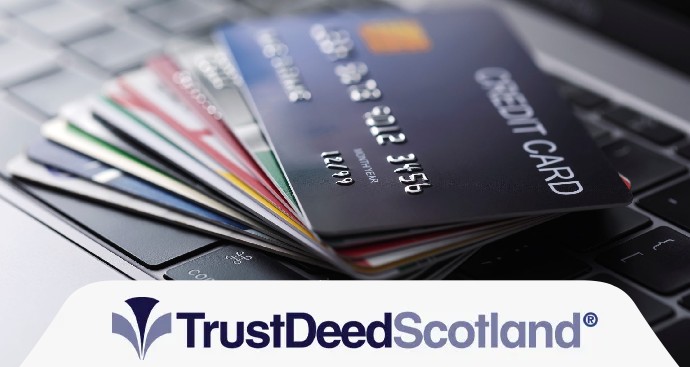
Credit card debt in Scotland can be difficult to repay, especially when you are only able to repay the minimum repayment amounts on a monthly basis. Problem debt can often occur when multiple credit card debts and other debts develop into unmanageable debt. Every year, thousands of Scots develop unmanageable, unaffordable debt due to their financial circumstances changing, or simply overcommitting. As problem debt can happen to anyone, it is important to seek help with your credit card debt as soon as you think you can no longer cope. Many people put off seeking help for fear of being judged, or because they may feel ashamed or embarrassed about their debt. Trust Deed Scotland® have helped over [volume] people in Scotland and our friendly, experienced advisers have collected over [reviews] five star reviews as a result. Many of those reviews say that they found our confidential service to be non-judgemental and that they wish they had done something about their debt sooner than they did. If you are struggling with debt; thankfully there are solutions open to you that can allow you to manage your debt and go on to enjoy a brighter future. If you do something about your debt today, you can stop worrying about it tomorrow.

What solutions help you repay credit card debt in Scotland?

A Protected Trust Deed is a formal debt solution that is available to Scottish residents that allows you to write off unaffordable debt and have a clear plan to get your finances back on track. The Debt Arrangement Scheme (DAS) allows you to legally freeze interest and charges and reduce creditor contact. There are other formal alternative solutions available in Scotland such as the Minimal Asset Process route into Sequestration. By restructuring your credit card debts and other forms of unsecured lending, you will typically reduce your debts to a more affordable level that will give you the opportunity to sort out your finances and get your life back on track.

What are the advantages of using a formal debt solution for credit card debt?

 
  • Additional interest and other fees such as late payment charges are stopped when you enter into a formal debt solution
  • Depending on the solution you choose, some of your unaffordable debt can be written off when you finish your term
  • Assets are protected when you enter a Trust Deed, or DAS
  • Your employment won’t typically be affected
  • Monthly debt payments become more affordable

What are the disadvantages of using a formal debt solution for credit card debt?

 
  • Your credit rating will be adversely affected for at least 6 years
  • Obtaining credit in the future may then afterwards become more difficult
  • If you don’t keep up your payments, your solution could fail
 

Is a formal Scottish debt solution right for me?

If you would like more information on whether you are eligible to apply for a Trust Deed, DAS or alternative, you can get in touch with the team at Trust Deed Scotland® today. We have a team of experienced debt advisers who every year help Scottish residents to manage their credit card debts and other unaffordable debts by offering tailored debt advice. Not everyone with a debt problem requires a formal Scottish debt solution. It is important to make sure that you seek professional advice from an experienced debt adviser and not be drawn into forming your own conclusion based on something that you read on a forum or advert that you clicked on social media for example. During a call with us, we’ll help you to understand your options. By making sure that our clients get personalised debt advice based on their affordability, lifestyle and needs you can then become better informed on whether you feel that a formal debt solution is right for you.

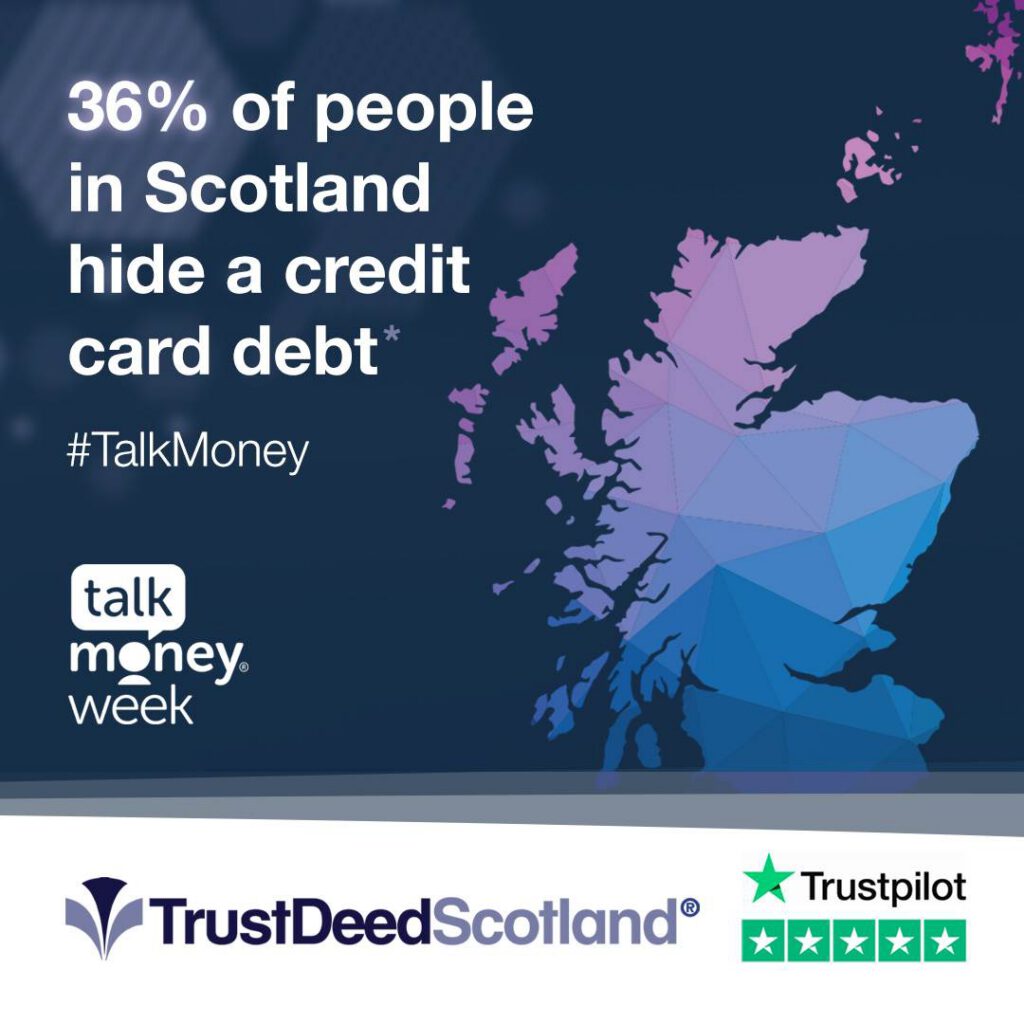
36% Of Scots With Hidden Credit Card Debts

A survey has shown that over 36% of the adult population has a hidden credit card debt. OVER 2 MILLION1 MONEY S£CR£TS KEPT FROM LOVED ONES IN SCOTLAND Research released by the Money and Pensions Service as part of Talk Money Week 2020 shows that 37% of people in Scotland have kept secrets from loved ones about credit cards, loans and savings • 37% of people in Scotland admit to keeping financial products secretPeople most likely to keep money secrets from their partner In the UK, millennials (25-34 year-olds) are the most secretive generation with three in five (59%) hiding money products Adults in Scotland have kept over 2 million2 financial products secret from their loved ones, according to a new study of people’s financial behaviours from the Money and Pensions Service (MaPS) to mark Talk Money Week. Of those who have kept financial products a secret in Scotland, the most common were hidden credit cards (36%). Despite Covid-19 having a widespread impact on people’s finances, the stigma surrounding talking about money in our culture remains – 36% of people in Scotland stay silent about money worries, with some of the reasons they give including embarrassment or fear of being judged. The research, which surveyed over 5,200 people across the UK, has been launched to mark the start of Talk Money Week (9-13 November), a public awareness campaign run by MaPS to improve financial wellbeing by encouraging people to open up about their finances, from pocket money through to pensions.

Hidden Credit Card Debts

Across the UK, 40% of people said they had secret financial products, with the most common products being:
  • Hidden credit cards (36%)
  • Undisclosed personal loans (23%)
  • Secret savings accounts (21%)
hidden credit card debts scotland UK millennials proved to be the most secretive generation, with 59% disclosing they have secret financial products, compared to just 25% of retirees. Of 25-34-year-olds who’d kept a product secret across the UK, credit cards, personal loans and overdrafts were most commonly hidden (by 40%, 31% and 23% respectively). The Talk Money Week study also revealed that across the UK people in relationships tend to underestimate the extent of money secrets their partner keeps from them. While 23% of people in relationships suspect their spouse has kept a money secret, hidden products were found to be even more common, with nearly half of those in relationships (45%) admitting to having an undisclosed money product. Some respondents told the researchers about secrets that became easier to manage once they opened up to their partners: one respondent claimed, “I was once close to bankruptcy due to credit cards and loans which I did not reveal to my partner until it couldn’t be hidden any longer. I admitted the issues eventually and we sorted it.” Another respondent said: “I didn’t tell my husband when I lost control of our credit card debt and ended up juggling cards and minimum payments. Eventually, I admitted it to him and actually acknowledged the amount of debt I now had – he supported me to get onto a Debt Payment Plan which I have been paying for just over a year now, and we are far more financially stable. We made a choice as a couple to no longer use credit. We also now have a joint account as our main account and only our agreed personal budget for minor expenses which is transferred out to our personal accounts.” Allison Barnes, Scotland Manager for the Money and Pensions Service said: “With over 2 million people in Scotland admitting they keep money secrets from loved ones, we are encouraging everyone across Scotland to open up and talk about any money worries you may have during Talk Money Week this week. “However, we understand there could be a number of reasons why people keep money secrets from those closest to them; a secret savings account could act as a buffer for those who want to escape a difficult relationship or an unpaid bill could be kept under wraps in order to protect anxious family members. For many who keep money secrets, it can be a feeling of shame or embarrassment that debts have spiralled out of control. 36% of people in Scotland claim to have money worries and initiating a conversation with someone – a friend, family member or expert – can be a first step to start to mitigate and address the problem. Opening up is a valuable start to making problems more manageable, for the benefit of our health, relationships and overall wellbeing. There’s no better time to start talking than today and the Talk Money Week website offers guidance to help start conversations and prepare yourself ahead of these. You are not alone and as our research shows in Scotland there are many others hiding secrets about money; there are resources available to help tackle some of these secrets including debt advice, as well as money and pensions guidance. Jasmine Birtles, TV money expert and Talk Money Week supporter, said: “Talking about money is still off-limits for a lot of people in the UK. Although we’re happy to talk about all sorts of subjects that used to be off-limits, if you ask someone about their income or investments they clam up. Talking about money really does seem to be the last taboo, despite it being something which is on everyone’s mind. In fact, it’s especially helpful to talk about it now, given the impact the pandemic has had on many people’s finances. It’s particularly important when times are uncertain to talk about money with those closest to us, so we can work together towards a common goal and support each other’s progress. If that’s not an option, you can turn to organisations like the Money and Pensions Service, who have trained specialists who give free, non-judgemental and impartial guidance.” MaPS has a wide range of resources to help people improve their financial wellbeing, starting with a conversation, during Talk Money Week and beyond. Guides to talking about money For guidance on kick-starting conversations about money, see the Money Advice Service’s guides: • Read their guide on Talking to your partner about money • Download their guide on how to talk about money. Take action to work through your money worries Money Navigator is a simple tool which helps people navigate their finances in the wake of Covid-19 to find a way forward, get money support now and help avoid future debt problems. Getting expert support To speak to an impartial expert for free guidance about your money and pensions, visit the following websites and helplines. Money Advice Service  0800 138 7777 Pensions Advisory Service   0800 011 3797 Pension Wise  0800 138 3944 Contact Trust Deed Scotland on 0141 221 0999 for tailored Scottish debt help. If your partner is controlling your money or running up debts in your name, you can find further resources and support on the Money Advice Service website. The research was conducted by Opinium for the Money and Pensions Service. A nationally representative survey of 5,225 UK adults aged 18+ was conducted from 9th – 19th October 2020, of which 440 were from Scotland. The data has been weighted to a nationally representative profile. 1. There are over 5,463,300 million people over 18 (the age you can apply for credit) in Scotland (ONS). The research found that 37% admit to keeping a financial product a secret from family and friends, equating to 2,021,421 people. 2. There are over 5,463,300 million people over 18 (the age you can apply for credit) in Scotland (ONS). The research found that 37% admit to keeping a financial product a secret from family and friends, equating to 2,021,421 products.

About Talk Money Week

Talk Money Week is an annual public awareness campaign, run by the Money and Pensions Service, to get the nation having conversations about money. Talking about finances has been shown to help people make better informed and less risky financial decisions, feel less stressed or anxious and more in control, have stronger personal relationships and help their children form good lifetime money habits. Talk Money Week will take place from 9-13 November 2020.

About Trust Deed Scotland®

Trust Deed Scotland® have helped over [volume] people in Scotland since 2009. Specialising in Trust Deeds and the Debt Arrangement Scheme as two formal debt solutions and advising on alternatives. Find out more about Trust Deed Scotland and get confidential, non-judgemental advice today by calling 0141 221 0999.

Debt Snowball vs. Debt Avalanche

The debt snowball and debt avalanche techniques are two ways of paying off your debt without utilising a formal debt solution. This is an alternative self-administered solution for residents of Scotland who are experiencing financial difficulties.

Alternative Debt Consolidation methods in Scotland

It’s always possible that a person can negotiate with creditors themselves and secure a short-term debt management plan, or voluntarily agree to pay off a debt over a longer-term. Sometimes without much of an impact against the individual, or in the case of more long-term arrangements, more commonly in the form of default notices being served as an indirect consequence. A default notice itself can have a negative impact on a persons credit history. Trust Deed Scotland® offer debt solutions including Trust Deeds and the Debt Arrangement Scheme and experienced advice on alternative Scottish debt solutions which may include the Minimal Asset Process route. The benefits of undertaking one of these solutions may include:
  • Reducing payments to an affordable level
  • Freezing interest and charges
  • Stopping creditor harassment over non-payment
  • Writing off unaffordable debt
The key to understanding what options are open to an individual and how they can clear their debts is to seek help from a qualified money advisor – this will then ensure that the individual receives transparent, balanced advice and that the pros and cons of each solution are fully explained. If you have unsecured debt and you’re finding these debts unmanageable – you can find out more about government-created debt management solutions available to you. A Trust Deed is only possible when you have over £5,000 of unsecured debts but you could still consider the Debt Arrangement Scheme if you have debts under that level, or indeed Minimal Asset Process if your situation is severe enough to warrant this as a solution. Depending on the individual’s credit rating, income and existing assets – There is the option of a debt consolidation loan which is often secured against a property, or it may be possible to secure a new credit card or lending source at a lower APR%. Using a secured loan against property may allow you to get a loan at a more competitive rate, particularly if you already have a bad/poor credit rating but your home is at risk should you not be able to afford repayment. Ultimately, whatever way works best for you will help you to realise your dream of enjoying a life after debt.

Debt Snowball vs. Debt Avalanche – What’s the difference?

If you’re determined on tackling your debts yourself, don’t need help with debts and have a large enough, disposable income that allows you to do so then you can investigate the two methods known as the debt snowball and debt avalanche systems. Both debt repayment plans are useful and help you regain control of your finances again, however, they both require a serious commitment from you and an element of frugal living. The truth is that the two methods are almost exactly alike in that they both ask you to pay minimum payments on all your debts except for one focus debt. The only difference between the snowball and avalanche is the order that you will pay off your debts. Some personal finance writers argue that one is better than another – but it’s really a matter of personal preference. With either method, you’ll send the creditor every extra penny you can find until the focus debt is paid off. As long as your total debt is going down then either is good.

What is the Debt Snowball technique?

The debt snowball technique involves making minimum payments on all debt, then paying off the smallest debts first to get them out of the way before moving on to bigger ones. The architect of this technique and coined phrase is the American personal finance guru Dave Ramsey. It is a debt reduction strategy that results in you paying off debts in order of smallest to largest. when the smallest debt is paid in full, the money you were paying to that debt rolls on to the next smallest debt you have. When you use the debt snowball technique, you will gain the instant feel-good factor of clearing a debt and moving onto the next.

What is the Debt Avalanche technique?

The debt avalanche technique involves making minimum payments on all debt, then using any remaining money to pay off the debt with the highest interest rate. The debt avalanche technique can often result in lower payments over time. The debt avalanche technique involves making minimum payments on all debt, then using any remaining money to pay off the debt with the highest interest rate. Using the debt avalanche to pay off debt will save you the most money in interest payments. For example, if you have £2,000 extra to devote to debt repayment each month, then the debt avalanche technique will make your money go the furthest. Say for example that you have the following debts: • £10,000 Royal Bank of Scotland credit card debt at 18.99% • £9,000 Capital One credit card debt at 3.00% • £15,000 Halifax loan debt at 4.50% In this example, the debt avalanche technique would have you pay off your RBS credit card debt first, then allow you to pay off your remaining debt in 11 months, paying a total of £1,011.60 in interest. The debt snowball technique would have you tackle the Halifax loan first, managing your debt in 11 months, but you would have paid £1,514.97 in interest. By switching the order of your debts, you can save hundreds of pounds in interest payments. For individuals with larger amounts of debt, the debt avalanche technique can also reduce the time it takes to pay off the debt by a few months.

Priority vs. Non-Priority Debts

Before you would commit to either debt repayment technique you would work out your income and then also take into account your priority and non-priority debts. This is vital as it is not advisable to ignore your priority debts such as council tax simply because it’s not interest-bearing. Ignoring priority debts may seem like a way of getting your debts paid quicker but are more like to result in serious consequences for you and your family if you stop paying your mortgage or rent.

Persistent Debt Caution

When you read up more on the debt avalanche and debt snowball techniques, it’s easy to get carried away with the idea of a debt repayment plan that can be self-managed, and that’s ok to feel that way. However, as these are largely American concepts, one major aspect you must factor in as a resident of Scotland is the rules around persistent debt. What’s persistent debt? You can find out more about persistent debt in Scotland but essentially, if you only make minimum payments for a period of 18 months on your credit cards, store cards and catalogues, your lender may suspend the service and ask for full repayment due to rules introduced by a UK regulatory body. However, you will be notified of this in advance and you may still be able to negotiate a debt repayment plan with the lender.

Debt Repayment Plan Advice In Scotland

Trust Deed Scotland® offer a confidential, non-judgemental debt advisory service that aims to help people in Scotland get themselves out of the severest of financial difficulties. A self-administered debt repayment plan such as the debt snowball or debt avalanche methods may be beyond your reach and a more formal debt management solution is required. In which case, we’ve helped over [volume] people in Scotland who were in a similar position and of those people, almost 3,000 left a debt advice review on the independent reviews platform Trustpilot. The difference between many of the companies advertised on Facebook or Google and Trust Deed Scotland® is that our advisors are based in-house and work directly with those who implement the solutions, ensuring continuity in your journey and that your details are not passed onto anyone else. We’re also experts in Scottish debt advice whereas an individual based in a call centre in the rest of the UK, or overseas may know as much as about debt help in Scotland as the piece of paper in front of them, also known as their sales script! And, as we have the correct authorisation and commitment to training and compliance – we’ll always have your best interests at heart. Some of those companies may attempt to sell you a solution that makes more sense for them, but it may not always be in your best interest. Get started today by trying our Trust Deed Wizard® tool or call us on 01412210999.

Are Credit Cards included in Scottish Trust Deeds?

All types of unsecured debts are required to be included within a Scottish Trust Deed and credit cards are the most common type of debt that is included in Trust Deeds and alternatives such as the Debt Arrangement Scheme.

What are Credit Cards?

Credit cards and store cards are both used to purchase goods and services on credit in the same way that a catalogue accrues a debt, or a personal loan, bank overdraft and so on. A debit card is different to a credit card as it relies on finds being active in an account. Credit cards may be issued by your bank or building society, or other financial services provider. A credit facility may be provided by a high street store for example, more commonly referred to a store card.

Are Credit Cards a problem?

We’re a nation of credit card enthusiasts. The Money Charity reported in July 2020 that the average credit card debt per UK household was £2,238 in January 2020. Credit cards are convenient and handy. They’re useful for travelling and in some cases, they do offer greater protection for purchases and reclaiming where a transaction has resulted in a poor buying experience. Chargebacks themselves are really useful. A chargeback is a refund prompted by your card issuer. If you paid for a product or service with a credit card, you can dispute it through the card issuer and let them take the dispute to the merchant. If the issuer succeeds where you failed, the purchase price is refunded to the credit card you charged it on. However, as credit cards become more readily available, and the numbers of people relying on them continue to grow, defaults are becoming more common. Store cards carry with them a different level of threat. The store card may seem like its a loyalty card, being used to open with an immediate discount. However, with little room for competitive rates, the interest rates are often unfavourable, to begin with, and comes with the added temptation in the form of buying there and then, in the store.

How to manage Credit Card debt?

If you have a temporary payment problem, contact the card issuer to discuss this. They may offer some short-term flexibility and with payment breaks being replaced with ‘tailored’ solutions as a result of Coronavirus recommendations made by UK regulators. If you haven’t defaulted on your credit cards and have a great credit rating, you can shop around for other credit cards which allow interest-free balance transfers. Caution should be used when examining the small print. Credit card lending is done based on risk. The more of a risk you are, the worse the interest rate you are likely to achieve as a result. Will you be able to afford new lending terms over the longer term. However, if like many thousands of other households in Scotland, your money issues are more serious, it’s best to get expert debt advice. A qualified money adviser can take a look at your situation, advise you of the options and allow you to make a balanced decision. Solutions for credit card debts in Scotland may include the Scottish Trust Deed, Debt Arrangement Scheme or Sequestration.

What is a Scottish Trust Deed?

The Scottish Trust Deed is more formerly known as a Protected Trust Deed and is used to consolidate debts over a typical period of 48 months. It’s a government legislated debt solution that allows an individual to freeze interest and charges, pay back a more reasonable amount to their debts and protect assets such as a home or car. There are disadvantages too such as an impact on your credit rating. When you have unaffordable debts such as credit card debts, the Scottish Trust Deed solution may work for you.

Alternatives to a Scottish Trust Deed?

The Debt Arrangement Scheme is a solution that also allows you to legally freeze interest and charges, stop creditor harassment over non-payment and gives you a fixed time frame for when you will be able to repay the debt. When evaluating your options – we recommend speaking to a qualified money advisor and that will allow you to receive tailored advice depending on your circumstances. In addition to the Scottish Trust Deed or DAS, you may consider Bankruptcy as a way of managing your debts. Sequestration and Minimal Asset Process are the two forms of bankruptcy that are used in Scotland, and while they may carry the severest of impacts to a credit rating and come with a natural stigma attached to them – They are an effective way of clearing debt.

Help with Credit Card debts in Scotland

We’ve helped over [volume] people in Scotland, became the No.1 rated with more Trustpilot debt advice reviews than anyone else in Scotland. Every week, our experienced debt team give hundreds of people non-judgemental and confidential advice. Call us on 0141 221 0999 or learn more about Trust Deed Scotland today.

What debts does a Protected Trust Deed include?

The type of debts that can be included in a Protected Trust Deed are generally those that are described as unsecured, with some exceptions. When you enter into a Protected Trust Deed in Scotland, most of your unsecured debts will be included and this may include:
  • Credit Cards
  • Personal Loans
  • Overdrafts
  • Catalogues
  • Gas and Electric Arrears
  • Council Tax Arrears
  • Payday Loans
  • Store Cards
  • Buy Now Pay Later Agreements
  • Any Other Outstanding Personal Bill e.g. Vet Bills
There are other debts that can be included in Trust Deeds, but we recommend contacting us today confidential advice as it’s important to understand not only the debts that you have and whether or not debts those can be included in a Protected Trust Deed, but also other aspects include your affordability, total debt owed and your income vs. expenditure. On some occasions, an alternative Scottish debt solution may be more beneficial for you.

What types of debt are excluded from a Protected Trust Deed?

Typical debts that aren’t included within a Protected Trust Deed include:
  • Mortgages
  • Secured Loans
  • PCP and PHP Agreements
  • Hire Purchase Agreements
  • Court Fines
  • TV Licence Arrears
  • Student Loans
  • Child Support Arrears
You can also find out more about the differences between secured and unsecured loans, if you’re unsure what this means.

Can joint debts be included in my Protected Trust Deed?

A joint debt in Scotland is a debt that has your name and the name of the other person you entered into it with on the agreement. A joint debt can be included in a Protected Trust Deed, however, the other person named on the debt will still be responsible for making payments towards it. This is also true of guarantor loan debts in Scotland. If you have some of the debt written off, the other person will still be asked to pay the remaining money back, therefore that debt isn’t written off in the same way that the other debts that included in the Protected Trust Deed would be written off. If you have joint debts, and are thinking about applying for a Protected Trust Deed, you should contact us for confidential advice first. We can let you know how it would affect you and the other person named on the debts.

What happens to my debt during a Protected Trust Deed?

Before Trust Deeds are agreed, proposals are put to the creditors who monies are owed to. If the creditors agree to the Trust Deed, you’ll make monthly payments towards the Trust Deed for 48 months, or 60 months if this was agreed as an extended duration for the Trust Deed. When your Protected Trust Deed has been complete, you’ll be discharged. At this point, any balances outstanding on the debts included in your Trust Deed will be written off.

Is a Protected Trust Deed right for me?

To find out if a Protected Trust Deed is right for you, we advise you to try our online Trust Deed Wizard® tool. This will begin the process of finding a debt solution for you, based on your own unique circumstances. When you’re looking at the types of debts that can be included in a Protected Trust Deed, you may have debts that can be included such as those owed to family and friends but you may benefit from speaking to Trust Deed Scotland® in order to find out the advantages and disadvantages of doing so. There are alternative solutions to Trust Deeds in Scotland, one of which is the Debt Arrangement Scheme. When you speak to an expert money advisor, all pros and cons will be explained to you, and sometimes the type of solution that fits your needs best may not be a Protected Trust Deed after all. When considering your decision on whether a Protected Trust Deed is right for you, we have previously written articles in response to questions we’ve previously been asked such as Is A DAS Worth It? or Is A Trust Deed A Good Idea? Trust Deed Scotland® has thousands of reviews on Trustpilot, however, we also offer Debt Arrangement Scheme and Sequestration advice, which means you will be given balanced, fair advice that puts you in control of the decision-making process.

What Happens When A Trust Deed Finishes?

When your Trust Deed comes to an end, your Trustee will issue what’s known as a ‘letter of discharge’. A copy of the letter of discharge will be sent to Accountant in Bankruptcy (AiB), the regulatory body of Trust Deeds in Scotland and the Register of Insolvencies will record your Trust Deed discharge. If you enter a Trust Deed, typically you’ll finish your repayment in 48 months, as long as you made all payments in your plan. Depending on your circumstances, you may have entered into a Trust Deed for an extended period of 5-6 years. Over the term of your Trust Deed, you’ll have made a number of affordable monthly payments – and this will count as ‘full and final settlement’ of the unaffordable debts included in your Trust Deed. At the end of your Trust Deed term, any unsecured debt that you weren’t able to repay during your Trust Deed will be written off. When you are discharged from a Protected Trust Deed, you will be discharged from any outstanding debts from the people you owe money to (your creditors) that you had included at the date you registered your Trust Deed. This means that your lenders are no longer allowed to pursue money that was owed to them when you signed the Trust Deed. However, some debts won’t be written off such as a student loan, or any court fine.

What Happens With Secured Debts After A Trust Deed?

If you owe money that is secured against an asset such as property or a vehicle, it won’t be included in your Trust Deed. Your secured lenders won’t be consulted on whether they agree to your Trust Deed, and they won’t write off monies that you owe them, whether you complete your Trust Deed term or not. However, the fact that you’re in a Trust Deed should make the secured payments easier to make, as your Trust Deed payments would be calculated not to take up any monies that you need for your typical essentials – not just your rent or mortgage, but utility bills, travel expenses and so on. If you’re a homeowner, you might be required to release some equity from your property, so you can repay your unsecured lenders more of what you owe them before they write off the rest. However, you may find that the impact of your Trust Deed on your credit rating makes it harder to release equity. Mortgage providers can see that you’ve entered a Trust Deed, so you might find that it’s harder to get a new mortgage deal, or that you’re charged a higher rate of interest if you do. If you can’t release any equity then your Trust Deed could be extended by 12 months.

Trust Deed Credit Score And History Impact

Information about Protected Trust Deeds and defaults will remain on someone’s credit reports for up to six years after they occur, so they are likely to remain on someone’s credit history even after they have been discharged from their Protected Trust Deed, which normally lasts for 4 years. If you’ve already defaulted on your credit agreements even before considering a Trust Deed, this too will be logged on your credit score.

How Will A Debt Arrangement Scheme Affect My Credit Rating?

When your Debt Payment Programme (DPP) is approved, you’re placed on the DAS register. This is coordinated and managed by the DAS administrator and is available to credit rating agencies. This register, along with other insolvency registers, is added to other information to your credit report, which calculates your credit score. Just like a Trust Deed, or even a simple default notice, the Debt Arrangement Scheme will affect your credit rating for at least six years. However, this may be extended further depending on how long it takes you to pay off your Debt Arrangement Scheme in total. E.g. if you are on a DPP for under 6 years there is no difference, or if you are going to repay a DPP for longer than 6 years; your debts will not be marked as satisfied until the debt has been repaid at the end of the DPP.

What is a Default Notice?

A default notice is usually sent when you’ve missed or paid less than the full amount for three to six months. The default notice will give you at least two weeks to catch up with any missed payments. If you can do this your account will carry on as normal. If you can’t pay the missed payments in this time your account will default. Default notices only apply to debts which are regulated by the Consumer Credit Act, such as credit cards, payday loans, personal loans and store cards. You’ll know a default notice has been served on you when you receive a letter informing you of a ‘Default notice served under section 87(1) Consumer Credit Act 1974’. The most recent revision of this act was in 1983, long before the evolution of the current Trust Deed legislation and the Debt Arrangement Scheme. As the wording of the default notices is quite old, you may, therefore, be directed towards Trading Standards and/or a solicitor – remember this is somewhat outdated legislation and you are advised to instead contact a qualified debt advisor, or debt charity instead. Unless you can get a default notice removed within 2 weeks, this will be recorded on your credit profile for six years. Depending on your lenders criteria, this may have the same affect as a Trust Deed or a Debt Arrangement Scheme registered against your name.

Can You Rebuild Your Credit After a Trust Deed?

Yes, it is possible to begin to rebuild your credit rating after your Trust Deed has finished. Eventually getting a mortgage after a Protected Trust Deed is achievable. It may not always happen immediately and will require a bit of work – it is certainly possible for most people to successfully be approved for a mortgage after a Trust Deed. Also, it will not be possible to obtain a re-mortgage on a home that is still in the Trust Deed, without the Trustee’s permission, until they have discharged their interest. A Trustee’s interest in a property can continue even after the debtor is discharged. It may be that the lending terms are not as favourable as before, however by showing a commitment by making regular payments to utility bills, and by using credit sensibly, purely for the purpose of rebuilding your credit score, you will in time secure a more favourable lending rate. Paying utility bills by direct debit can help rebuild credit after a Trust Deed and even just joining the electoral roll helps prospective lenders build trust in you.

A Brighter Financial Future

Many people in Scotland have approached Trust Deed Scotland® after they’ve put off seeking help over their unaffordable debts for a number of years. So severe are some people’s financial difficulties, that if minimum payments were made only; it may take them longer than two decades to clear their outstanding debts. If you’re struggling with debts and making minimum payments to debts such as credit cards, you may regard protecting your credit score as being more important to you than dealing with the debts you have. This isn’t uncommon. However, anyone pondering the pros and cons of the impact of entering a formal debt management solution may have on their credit score after a Trust Deed finishes should look towards the long term outlook and whether it’s better to essentially press the restart button, or continue on alone waiting for a solution to present itself in another form.

Want Trust Deed Advice?

If you feel you’re struggling with debt, seek tailored debt advice today. If you do something about your debt today, you don’t need to worry about it tomorrow. As well as Trust Deeds and Debt Arrangement Scheme, there are other alternative Scottish debt solutions. Trust Deed Scotland® are able to offer no-obligation, confidential advice on all debt management methods available in Scotland. Call us on 0141 221 0999 or try our Trust Deed Wizard® tool to get started today.

Debt Advice Charity Reports Covid-19 Income & Debt Concerns

Over 40% of people in Scotland are concerned about income during the Coronavirus lockdown, Citizens Advice Scotland reported. Of those worried about their finances, the money and debt advice charity said that 31% of its respondents said they were concerned about utility bills, rent and debt repayments. In addition, 27% are concerned about mortgage repayments and the same number are concerned about paying for food and other essentials. 29% say they worry about paying council tax.

Debt Advice Charity Concerns

Citizens Advice Scotland, who ran a survey on the subject said the concerns around income show the extent of financial uncertainty people continues to feel during the outbreak. Myles Fitt, the Financial Health spokesperson for the Scottish debt advice charity, speaking on the issue advised: “What advisers across the Citizens Advice network were seeing before Covid-19 was the issue of people struggling to pay for key bills as a result of a lack of income in the first place. With over 40% of people in our survey concerned about their income, there is a real risk the pandemic makes this a more serious issue for a larger group of people. Both the Scottish and UK governments, as well as industry regulators, have taken significant steps to ease the short term pressure on people meeting the costs of daily living. Our message to people is that support is there and to access the support you are entitled to. Across the country, the Citizens Advice network has adapted to these changed circumstances, with CABs across the country still delivering advice in these challenging times, either on the phone or electronically by local advisers.” Trust Deed Scotland®, the leading debt advice company in Scotland further advised: “Many people in Scotland are now aware that lenders and companies ranging from mortgage lenders, credit card companies to car finance and guarantor loan companies are offering payment breaks but the message is being lost in translation that individuals need to contact their lender and request the payment break. The lender simply will not offer this without being prompted. Now with it being the first day in May, traditionally the first of a month is the day most people have a direct debit or standing order set up, those who have cancelled without informing their lender may start to see further charges being added to their debts and that will potentially also have a negative impact on their credit ratings as their account will show missing transactions rather than those authorised by the lenders. This is also potentially the first payday date for some people laterly furloughed after the outbreak began. We’re concerned that these issues come cause issues further down the line when the post-Coronavirus recession hits. We repeat our previous advice that if you’re struggling with debts due to your income being reduced as a result of the Covid-19 outbreak, seek payment breaks wherever you can and get it confirmed by the lender by email, or in writing.”

UK’s Personal Debt Shrank In March

It’s not all bad news, fortunately. Personal debt totals have indeed shrunk in the month of March, it has been confirmed. The amount of debt held on credit cards was lower than the same month the year before for the first time since it began recording the data in 2008, the Bank of England reported. Households in the UK paid back a staggering £3.8billion more debt than they borrowed in March 2020, the biggest figure on record, as households shunned credit cards in the face of the Coronavirus crisis. Credit card debt reduced by £2.4bn in a month to £69.3bn, for only the second time since July 2013. Therefore, the amount UK consumers have outstanding on credit cards has fallen, according to the Bank of England figures. As written about recently by Trust Deed Scotland®, many households across Scotland have saved money during the Coronavirus lockdown in Scotland by adopting careful household budgeting techniques.

Debt Advice in Scotland

At Trust Deed Scotland® we understand that debt can be overwhelming.

You may be finding it difficult to cope already and with the current Covid-19 conditions, this may be causing you to worry further about how you will afford to repay your unsecured debt, don’t worry every year we help thousands of Scottish residents reach a brighter future. For qualified, expert coronavirus debt advice in Scotland, give us a call on 0141 221 0999 or complete our Trust Deed Wizard®.