Author: Craig Stocks

Trust Deed Scotland x Twitter

Keep up to date with the latest news and advice by following our official Trust Deed Scotland Twitter account now known as x.
For many people with unaffordable debts – Watching one of our TV awareness campaigns, or listening to one of our radio ads is the first step in the process of making their debt repayment more affordable and looking forward to a brighter future.
More and more people are finding out about Trust Deeds and the Debt Arrangement Scheme through social media and word of mouth recommendations on platforms such as Twitter.
Find out more about us and contact Trust Deed Scotland with any questions, concerns, or ideas. You can also reach Trust Deed Scotland on 0141 221 0999.
Official Trust Deed Scotland® social media feeds?
Trust Deed Scotland Instagram feed. Follow. Trust Deed Scotland Facebook feed. Follow. Trust Deed Scotland X feed. Follow. Trust Deed Scotland TikTok feed. Follow.Trust Deed Scotland Twitter – Our Other Media Channels
As heard on Radio Clyde, Real Radio and as seen on commercial TV channels throughout Scotland, we’ve been at the forefront of Trust Deed and Debt Advice awareness campaigning since 2009. We have become the recognised choice in Scotland for debt solutions having given a route to financial freedom to over [volume] people. Why not join us and let us hear your voice using any one of these tags #trustdeedscotland #debthelpstories Our main Trust Deed Scotland social media accounts: Facebook. TikTok. Instagram. Twitter / X. Trustpilot. Google. Messenger. Blog.Trust Deed Scotland Facebook
Keep up to date with the latest news and advice by following our official Trust Deed Scotland Facebook account.
For many people with unaffordable debts – Watching one of our TV awareness campaigns, or listening to one of our radio ads is the first step in the process of making their debt repayment more affordable and looking forward to a brighter future.
More and more people are finding out about Trust Deeds and the Debt Arrangement Scheme through social media and word of mouth recommendation on platforms such as Facebook.
Find out more about us and contact us with any questions, concerns, or ideas. You can also reach Trust Deed Scotland on 0141 221 0999.
Official Trust Deed Scotland® social media feeds?
Trust Deed Scotland Instagram feed. Follow. Trust Deed Scotland Facebook feed. Follow. Trust Deed Scotland X feed. Follow. Trust Deed Scotland TikTok feed. Follow.Trust Deed Scotland Facebook – Our Other Media Channels
As heard on Radio Clyde, Real Radio and as seen on commercial TV channels throughout Scotland, we’ve been at the forefront of Trust Deed and Debt Advice awareness campaigning since 2009. We have become the recognised choice in Scotland for debt solutions having given a route to financial freedom to over [volume] people. Why not join us and let us hear your voice using any one of these tags #trustdeedscotland #debthelpstories Our main Trust Deed Scotland media accounts: Facebook. Instagram. Twitter / X. TikTok. Trustpilot. Google. Messenger. Blog.Trust Deed Scotland Instagram
Keep up to date with the latest news and advice by following our official Trust Deed Scotland Instagram account.
For many people with unaffordable debts – Watching one of our TV awareness campaigns, or listening to one of our radio ads is the first step in the process of making their debt repayment more affordable and looking forward to a brighter future.
More and more people are finding out about Trust Deeds and the Debt Arrangement Scheme through social media and word of mouth recommendation on platforms such as Instagram.
Find out more about us and contact us with any questions, concerns, or ideas. You can also reach Trust Deed Scotland on 0141 221 0999.
We are authorised and regulated by a UK regulatory body.
Official Trust Deed Scotland® social media feeds?
If you’re looking to follow us on on social media, you can find us on any of the follow profiles: Trust Deed Scotland Instagram feed. Follow. Trust Deed Scotland Facebook feed. Follow. Trust Deed Scotland X feed. Follow. Trust Deed Scotland TikTok feed. Follow.Trust Deed Scotland Instagram – Our Other Media Channels
As heard on Radio Clyde, Real Radio and as seen on commercial TV channels throughout Scotland, we’ve been at the forefront of Trust Deed and Debt Advice awareness campaigning since 2009. We have become the recognised choice in Scotland for debt solutions having given a route to financial freedom to over [volume] people. Why not join us and let us hear your voice using any one of these tags #trustdeedscotland #debthelpstories Our main Trust Deed Scotland social media accounts: Facebook. Instagram. Twitter / X. TikTok. Trustpilot. Google. Messenger. Blog.What is a Notice of Assignment?

Notices of Assignment (NOA) are used to inform you that a third party has ‘purchased’ the debt from the original lender.
The new ‘assignee’ takes over collection procedures of that debt going forward, which can sometimes result in a debt collection agency being used to recover the monies on behalf of the new owner of the debt.
There are two types of debt assignment:
- Equitable Assignment
- Legal Assignment
- The Deed of Assignment must be made in writing
- A Notice of Assignment notification must be sent to you, as the borrower
- The assignment must be absolute
Equitable Assignment
Under an Equitable Assignment, only the amount owed is assigned, and not the original creditor’s rights and responsibilities. With Equitable Assignments, the purchasing party is unable to take enforcement action in their own right.Legal Assignment
Legal Assignment gives the assignee transferred power to enforce the debt.Why Do Creditors Sell Debts?
Most lenders borrow money based on risk projections and as such, an account that then falls into default becomes problematic for them to collect monies from and therefore it may be more commercially viable to pass it onto another firm who have a different business model, which allows them to purchase debts, and collect with their own techniques. When you sign a credit agreement with a creditor, there will have been a clause within the small print of that agreement. The creditor will have stated that they are able to assign their rights to a third party. However, just because a new company has taken on the debt, as per the terms of the notice of assignment, they are not allowed simply to bull you with letters, text messages, or phone calls. If you’re being threatened by any creditor, new or old, and have unaffordable debts – give us a call on 0141 221 0999 for free, confidential advice.Notice of Assignment – What Happens Next?
As far as your credit report is concerned, the new company taking on the debt on behalf of the original creditor will notify the Credit Reference Agencies of any default once repayments have started. At this stage, you’ll see a company name-change on your credit file in regard to the debt that is subject to the notice of assignment. The previous company’s name should be removed from your credit file, and any default will now be associated with the new creditor.Notice of Assignment – How Does It Affect You?
If you were previously having difficulty in repaying your debt before the notice of assignment was served, you may find that the new owner of the debt has more flexibility to freeze interest and charges, allowing you to pay off what is owed more quickly. Having a debt assigned to a new company can become a benefit for you as agreeing a sustainable debt repayment plan is in their mutual interest as well as yours. If you were to keep up payments – further action can be often thwarted. You should always seek expert debt advice in Scotland, if you’re struggling with unaffordable debts.Getting Help Understanding a Notice of Assignment
If you have received a notice of assignment and you’re struggling to understand how it affects you, contact Trust Deed Scotland® today on 0141 221 0999. Our expert debt advisors are ready to give you confidential debt advice and help you understand what solutions are available for you and your debts. Since 2009, we have advised thousands of people in Scotland on the advantages and disadvantages of the Scottish Trust Deed, Debt Arrangement Scheme and alternative solutions to people experiencing financial difficulties in Scotland.How Do I Get A Scottish Trust Deed?

Everything you need to know about getting a Scottish Trust Deed.
A Scottish Trust Deed is a form of Scottish debt help that reduces unaffordable debt repayments down to one single monthly payment and helps you to write off up to 60-80% of unsecured debts.
As the title suggests, it is only available to residents in Scotland and will generally last for a period of four years, however sometimes a longer period is considered and that typically may increase the duration by a further 12 months, or longer depending on the circumstances surrounding the case.
Scottish Trust Deeds are legally binding and are designed to help those with a debt level over £5,000 and are struggling to repay their debts.
The Protected Trust Deed as it’s more formally refered to uses official legislation to negotiate an agreement between an individual and the companies that they owe monies too, arranged by an Insolvency Practitioner (IP) who acts as Trustee.
When you apply for a Scottish Trust Deed an assessment of your affordability will be carried out to work out what you can reasonably afford to pay each month.
This Trust Deed suitability-checker will document your income minus your day-to-day living expenses e.g. mortgage, household bills, travel expenses and so on. As well at the Scottish Trust Deed, you would also be assessed for your eligibility for alternative solutions, including the Debt Arrangement Scheme.
After you get a Scottish Trust Deed, any remaining unsecured debts will be written off, including the interest and charges that were frozen at the beginning of the process.
Finally, a Scottish Trust Deed is not a debt consolidation loan. You will not be borrowing money, you will not be credit-checked for approved finance.
Getting A Scottish Trust Deed – 8 Stages In the Process
With so many options and different points-of-view, we know that it can be confusing to understand and decide if this is the right form of Scottish debt help for you. We have broken the Trust Deed Scotland® process down into 8 steps to explain how getting a Scottish Trust Deed works.- Trust Deed Scotland® will arrange an in-depth review of your financial situation, provide you with a personalised illustration and agree with you on what a realistic yet affordable monthly payment looks like and agree with you how your assets will be treated.
- Only when you’re happy to go ahead with a Scottish Trust Deed, your Trustee will go over the terms of the arrangement and once you are 100% satisfied with the terms, will you then sign it off.
- After you have signed your Scottish Trust Deed, your Trustee will then make a proposal, on your behalf, to your creditors. The Trust Deed proposal will advise them of your income, expenditure and offer of how much you can realistically afford to pay each month.
- Your Trust Deed is then registered on the formal bodies website, where your creditors can access it. The formal body that regulates the process is known as the Accountant in Bankruptcy (AiB).
- The people you owe money to are sent the proposal within 7 days of the Trust Deed advert on the official website. Creditors are then given 5 weeks to review the proposal and either accept or reject the terms. They must contact your Trustee as creditors at this point can’t directly contact you.
- If the majority of your creditors accept the proposal then the Trust Deed will gain protected status. If the people you owe money to fail to respond to the proposal, it is believed that they have agreed to the terms.
- As soon as your Scottish Trust Deed is registered as protected, your creditors can no longer take any legal action against you to recover any debts and any interest and charges on your debts are frozen.
- All you need do then is make your payments as agreed, complete an annual Scottish Trust Deed review to check your personal details, income and expenditure details are up-to-date and look forward to a brighter future.
Can I Negotiate Getting A Scottish Trust Deed Myself?
Only a licensed Insolvency Practitioner can set up the arrangement on your behalf, unfortunately. There are many licensed Insolvency Practitioners in Scotland, and while it’s true that there may be slight differences in the quality of service you may receive from them, all IPs are regulated to ensure that you, the client and your needs are at the forefront of the process. You may also want to consider whether or not is a Trust Deed is a good idea for you, and any alternatives such as the Debt Arrangement Scheme. Is a DAS Worth It? Sequestration, Scottish bankruptcy sounds daunting. And it’s fair to say its the most drastic solution you can undertake to resolve your debts but in the right circumstances, it can help you to get out of debt. While we often advise against it, a loan can be a way of consolidating debt in Scotland.Why Trust Deed Scotland?
At Trust Deed Scotland® we’re really proud of our reputation and our achievements within the industry. You can find out more about Trust Deed Scotland and we always welcome questions from anyone struggling with debts. You can contact Trust Deed Scotland at any time. 30,000 People Helped – The number of people we’ve helped with debt in Scotland over the last decade or more shows the in-depth level of experience we have. No.1 Rated On Trustpilot – We’ve gathered thousands of reviews on Trustpilot, which are independently audited and verified by the platform themselves. Having debt still has a stigma attached to it, however, we’re pleased that our service compels people to openly write reviews about us. Not only does it highlight how well we’re doing as a company but also allows people to read about how other people got themselves into financial difficulties, helping them to understand there really is no need to feel embarrassed, or ashamed about having debt. 98.6% Creditor Acceptance Rate – When you apply for a Scottish Trust Deed with us, we will use our industry experience to give you everything you need to know and whether it is likely that the application will be successful. The pros and cons will always be explained, and you may decide that an alternative solution like the Debt Arrangement Scheme is more favourable for your needs. Up to 70% Reduction In Monthly Payments – The amount you repay each month will be based on you and your lifestyle and we’re able to reduce the amount you repay, by as much as 70% each month. No Setup Fees – You’re experiencing financial difficulties. We have strong ethics. Therefore setup fees, finders fees, charges for advice; whatever way its described – none of these make sense to you, nor us. This should be true for many other providers of Scottish Trust Deeds, but cannot be guaranteed. If anyone says otherwise, walk away. Specialist Advice – Some companies still offer an ‘introducer’ service without the right level of experience. Predominantly, the same types of people who cold call, send text messages or purchase data lists. Not only are we authorised by our regulatory bodies, we also have internal commitments to undertaking rigorous training and feedback sessions with our advisers. 100% safe, secure and confidential. You can also take comfort in knowing that your data is safe with us as we don’t sell your details onto third-parties. Registered Trademark – We’re the official Trust Deed Scotland®. Our brand name is protected to ensure that no copycats can trade falsely using our strong brand name.How Much Will My Trust Deed Payment Be?
If you live in Scotland and you’re thinking about entering into a Trust Deed, one of the most important things to understand is how much you will need to pay the people whom you owe money to every month. You may have seen ads on social media promoting Trust Deed payments at £70p/m or £20p/w but this is a misleading headline if taken completely at face value.
Whatever amount you do agree to pay, you will pay this amount for a fixed period of typically four years, after which any debt that is not paid after this time is written off. It’s therefore important for all parties that the amount agreed is affordable for you, for the duration of the Trust Deed.
The monthly Trust Deed payments you have to make are based on your disposable income. Disposable income, also called surplus income, is the money you have left each month after all your reasonable living expenses are paid. For example, if your total net income per month is £1,600 and your total living expenses per month are £1,500, your disposable income is £100 (£1,600 – £1,500 = £100)
This disposable income figure left over is the amount you have to pay the people you owe money to, which essentially becomes your Trust Deed payment. However, this is a very simple example.
Understanding which expenses you should include and how much for each expense is reasonable are important also. Trust Deed payments made into a Protected Trust Deed in Scotland have been worked out using the Common Financial Tool.
Consider too that other solutions exist such as the Debt Arrangement Scheme or Sequestration which may benefit you more than what a Trust Deed could.
What is the Common Financial Tool?
The Common Financial Tool (CFT) is used to assess household income and expenditure for all statutory debt solutions in Scotland i.e. Trust Deeds, Debt Arrangement Scheme and MAP/Sequestration. At Trust Deed Scotland® our expert advisors will run through your living expenses with you and advise of whether they are within guidelines. Remember, you would typically be in a Trust Deed for 48 months and would be prepared to live within a fairly attributed budget for that duration. The guidelines were developed by representatives from the official body, the Account in Bankruptcy, alongside other recognised bodies and debt charities. This means that usually whatever expenditure you have, will be included within the common financial tool guidelines as fair and reasonable. If you want to get started and work out what you’re Trust Deed payment is likely to become, we recommend trying our Trust Deed Wizard® tool.What will be included as expenditure in my Trust Deed?
Essential expenditures include your mortgage or rent, utility bills and council tax bills and these will be included as expenditure in the Trust Deed ‘as they are’ Extra expenditure allowances are also built in to cover the costs of looking after dependent children. The guidelines used in the Common Financial Tool are based on the Living Costs and Food Survey produced by the Office for National Statistics for the UK government. Your expenditure during a Trust Deed may be limited to a lesser extent. However, you and your family will be able to manage financially on the expenditure allowances provided. Most other types of outgoings are subject to the guidelines used in the Common Financial Tool. These expenditure guidelines assign varying maximum and minimum amounts which are deemed ‘reasonable’ according to your unique family circumstances. Your food allowance will be higher for a couple than it would be for an individual. In addition to food, other examples of these expenditures include sport and leisure activities, TV and internet, hairdressing, newspapers, and insurance.How to calculate a Trust Deed Payment when you’re paid weekly?
If you receive any of your income weekly, four weekly or fortnightly, the amount you pay will need to be converted into a monthly repayment figure. If you’re paid weekly, your Trustee does this by multiplying the weekly amount by 52 (weeks of the year) and then dividing that figure by 12 (months of the year). If you’re paid in a four weekly cycle, you will multiply the 13 4 weekly cycles in a year and divide this by 12 and for fortnightly, 26 payments divided by 12 months.Is there a minimum Trust Deed payment?
There is generally no minimum payment that are required for Trust Deeds as long as the amount you are proposing to repay is the best offer you can reasonably afford on a regular basis. However, the amount you pay into the Trust Deed must represent both a sensible repayment to your creditors and the reasonable fees that the Insolvency Practitioner needs to deduct from your payments to pay for its maintenance cost. And remember, you should never pay any sort of upfront fees, setup fees, arrangement fees or anything else before entering into your Trust Deed. In general speaking terms, it is unusual to start with payments which are less than £100 a month. However, just because there is an amount specified here a minimum Trust Deed payment and that’s a figure you think would be affordable; it doesn’t automatically mean that the Trust Deed is the most suitable solution for you, or that the proposal would be approved with this repayment offer. Trust Deed Scotland will carry out a detailed assessment of your income, expenditure, assets and total amount of unsecured debt you have so that we can understand your circumstances. There are some other factors that we may need to look at as well, but with this information, we can then provide you with a personalised illustration of what your options are, plus the pros and cons of each. Also, remember that the calculation for Trust Deed repayment is used for all statutory debt repayment options under the Common Financial Tool guidelines, so if you can’t afford the Trust Deed then a solution such as Minimal Asset Process may be more beneficial for your needs. Other considerations include joint debts you may have with a partner/spouse. It’s also important for you to learn about alternative solutions, how they may affect you and to be informed of all the key facts, in order to make a balanced decision over what you would like to proceed with.Can I haggle over my Trust Deed payment?
If you’re in financial difficulties, the appeal of saving money is always alluring. After all, we can switch energy suppliers online, beat down our Sky TV and Virgin Media subscriptions, and play them off against one another to save money, or we can use discount and voucher codes to get money off furniture, clothes and even takeaway food. But haggling over your monthly Trust Deed payment is not something that is possible. You’re free to speak to as many companies as you feel comfortable with, however, each company should correctly assess your circumstances and the payment amount should always remain the same, and ultimately based on what you can afford. Instead of haggling over Trust Deed payment amounts, we would instead advise you to focus on what is more important for the duration of your Trust Deed. Creditor Acceptance rate – At Trust Deed Scotland, we have a 98.9% Trust Deed approval rating and 99.8% Debt Arrangement Scheme approval rate. There are alternatives we offer advice on too. Trust Deed reviews – We’ve got thousands of five star Trust Deed reviews. In-House Team – Our experienced debt advice team have helped over [volume] people since 2009. Our commitment to the quality of service we provide remains our top priority throughout your debt help journey, from start to finish. That’s why it is important you choose the right company. You will never be passed to another company to implement your debt solution. These are just some of the reasons we’re ranked number 1 in the category ‘Debt Relief Service’ in Scotland. If you are struggling with unaffordable debt, you can call us for confidential advice on 0141 221 0999, or try our Trust Deed Wizard® to get started now.Do Trust Deeds Affect Spouse Or Partners?
Entering into a Trust Deed in Scotland will not directly affect your partner or spouse unless you have joint debt together.
When you sign a credit agreement as an individual, because you have done so in your own name; your spouse or partner is not responsible to pay your debts. If you start a Trust Deed, your partner or spouse will not be directly involved with the agreement.
Your other half will not be forced to help you repay your debt and your creditors are forbidden from revealing details of the debt to your partner/spouse unless given clear permission to do so by you. This doesn’t matter if you are married, or not.
When considering whether Trust Deeds affect a spouse or partner, consider the impact of reduced monthly spending and how this may impact your monthly budgeting. You can find out more about this in our article about how much will your Trust Deed payment be.
Joint Trust Deeds
You can’t have a joint Trust Deed, in the same manner, that you can enter into a joint Debt Arrangement Scheme, for example. There is nothing stopping you from having two individual Trust Deeds, as long as there is enough qualifying debt on each application.Joint Debts
You can find out more about joint debts, however in brief there isn’t a one-size-fits-all approach and you can in theory include joint debts in your Trust Deed, however, the other party becomes liable for the balance of the debt.Do I Need To Tell My Spouse About My Debts?
It is possible for an individual to enter into a Trust Deed and complete a full repayment period without their spouse or partner finding out about the debts, however, we typically encourage our clients to be open about their financial difficulties for emotional support. Hiding debt from partners and keeping them a secret from your family or closest friends can be less of a burden if shared. As a company that has become the No.1 rated for debt advice across Scotland, we’ve helped over [volume] people look forward to a brighter future. Each of those [volume] people is someone’s wife, husband, fiancé, fiancée, father, mother, son, daughter or friend. We’re finding that more and more people are approaching us for Scottish debt help after being recommended by an individual who has already been through the process. Not only is this a testament to the service provided by Trust Deed Scotland® but also highlights a growing number of people who feel confident enough to discuss their finances with those closest to them; whether that be a spouse, family member, or even a work colleague. You may want to consider your credit rating and how that may affect your spouse or partner and should you wish to attempt joint credit applications, this will typically have an impact on the joint application.Joint Debt Advice & Help
It is possible to arrange a call with you and your spouse or partner on the same call. Our debt experts will arrange a time that is suitable for both of you – whether that be on the same call, or on separate calls – whatever is most convenient for you. Home visits are also growing in popularity for this reason. Contact Trust Deed Scotland today on 0141 221 0999 or try our Trust Deed Wizard® tool to find out what Scottish debt solutions you may qualify for. When you’re weighing up the pros and cons of which solutions may be best for you, look for debt advice reviews. Independent reviews platform such as those featured on Trustpilot give you an idea of which companies are good to approach. Trust Deed Scotland® have [reviews] five star reviews to date.What Is Life After Debt?

Trust Deed Scotland® has been giving debt advice in Scotland since 2009 and helped over [volume] people with formal Scottish debt solutions known as Trust Deeds and DAS with over [reviews] customer reviews on Trustpilot.
We talk about Life After Debt quite often but what is Life After Debt?
Life After Debt is the light at the end of the tunnel for those with unaffordable debts, it’s like a roadmap that gives them clarity on how long it will take them to get out of debt and how much money that they will be able to save on their debt payments every month until they’ve cleared the debt.
This results in a new, reduced and affordable monthly repayment. For Trust Deeds, this may last a typical duration of 48 months (sometimes extended) and after that, any unsecured debts left over are written off.
How and why do people find themselves with unaffordable debts?
Some of the common reasons that people in Scotland end up with debt that they can’t afford to repay are broken down into the following categories.- Relationship Breakdown – Coping with debt after a split
- Reduced Income – Less income, same debt
- Birth of a Baby – Down to single income
- Unexpected Illness or Injury– Unexpected loss of income
- Business Failure – Leftover liabilities including tax
- Overcommitment of Credit – Taken on too much debt
- Additional Financial Support – Providing support to others leaving you short
What does Life After Debt really look like?
Life After Debt will ultimately mean different things, for different people. However, here are some of the advantages that being debt free can bring to you. ➊ You Get to Relax You don’t have to feel anxious about opening letters or answering your phone. ➋ You Get to Keep More of Your Money You can save for holidays & other items that you never thought you could afford. ➌ What’s Yours is Yours When you live debt free, your things are really yours. ➍ You’re Independent You can live an autonomous lifestyle – a life that reflects what’s really important to you. ➎ You’re Happier When we imagine Life After Debt, it always seems happier & carefree, and there’s a reason why, because it’s true. ➏ You Get to Say: I’m Debt Free You set a goal & accomplished it and you get to be proud of that.Where to get Debt Advice in Scotland
As the No.1 rated debt advice company in Scotland, we’re in a position to help you with your debts and advise you on the pros and cons of Trust Deeds, the advantages and disadvantages of the Debt Arrangement Scheme and the benefits and risks of Minimal Asset Process or other alternative debt solutions available in Scotland. Get started today by giving us a call on 0141 221 0999, or by trying our Trust Deed Wizard® tool. If you’re looking for more inspiration on what Life After Debt looks like follow the official Trust Deed Scotland® on our social channels: Twitter, TikTok, Facebook & Instagram or send us a message on Messenger Look for #LifeAfterDebt.Who Are Trust Deed Scotland?
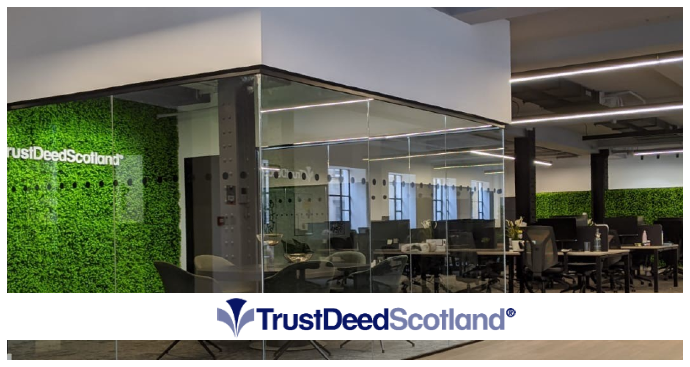
When people are looking into getting help with their debts, they may or not know already know who Trust Deed Scotland® are, what are Trust Deeds, the Debt Arrangement Scheme or alternative Scottish debt solutions in Scotland and whether the solutions offered may seem that they are ‘too good to be true’.
If you’ve been experiencing financial difficulties as a result of a recent change in your circumstances, or you’ve been in debt for a number of years; we’re offering solutions that means you’ll make lower monthly payments, protect your home and car, and write off debt you can’t afford to repay – in as little as 48 months…We appreciate how this may sometimes seem too good to be true.
You can find out more about Trust Deed Scotland and our story of how we became the No.1 rated debt relief company in Scotland.
The first thing you may or may not know about who are Trust Deed Scotland® is that we’ve helped over [volume] people in Scotland since 2009.
In-House Team – We don’t sell your details on. You will remain with Trust Deed Scotland® from the moment that you make your first enquiry until after you have been successfully discharged.
Some websites that you find on Google, social media and elsewhere are known as lead generators. This means that you may be passed from pillar to post and whilst the GDPR has resulted in better data protection all round, there are a number of companies who will use your details for their own end, and the companies that they work with ultimately concentrate on the solutions that result in more money for themselves.
Trust Deed Scotland® pride ourselves on providing balanced debt advice that explains the risks and benefits of Trust Deeds, the pros and cons of the Debt Arrangement Scheme and the advantages and disadvantages of any other alternative solution you may qualify for.
We’re aware of other organisations who use pushy sales tactics, we’re also aware of a number of copycat companies pertaining to be Trust Deed Scotland
Over [reviews] 5 Star Reviews – More than anyone else in our industry, we’ve collected on the independent reviews platform Trustpilot. The reviews that we’ve curated highlight in our client’s own words, the type of service that we’ve given them, and how the solutions have impacted their lives.
We understand that there still is a stigma attached to being in debt and that it can be difficult to take the first steps of asking for help.
Therefore whenever anyone leaves us a review, not only does this indicate that we’ve provided an ‘excellent’ service which we’re immensely proud of but it also helps to display a level of trust bestowed upon us by individuals who were in a similar position to anyone who is still considering if Trust Deeds are legit.
98.6% Trust Deed Acceptance Rate – If you apply for a Trust Deed you will be made aware of the likeness of the Trust Deed / DAS being approved. You will always be kept up to date and informed of your Trust Deed / DAS application, every step of the way and we will work with you to explain and overcome any issues, of all available solutions.
As the No.1 rate debt advice company, with the experience of helping over 25,000 in Scotland – this is where our years of experience help us to drive successful outcomes for our clients.
Scottish Heritage – Many of the organisations that offer debt advice in Scotland offer it as a bolt-on to solutions offered in England, Wales and Northern Ireland. We’re proud to be owned and operated in Scotland, with the correct experience and knowledge to offer these solutions in Scotland.
There are many differences between Trust Deeds and Individual Voluntary Arrangements as one example, that those companies based elsewhere simply don’t have the same level of expertise.
No Setup Fees – Unlike some other companies, we do not charge setup fees or any other upfront costs for our services. The purpose of asking for help with debts is to get your life back on track and work towards a brighter future. Adding fees and charging you for debt advice doesn’t help you and doesn’t sit right with us. We’ll always have your best interests at heart.
70% Debt Write Off Possible – Affordable monthly repayments are one of the biggest advantages to both Trust Deeds and the Debt Arrangement Scheme, and by using our Trust Deed Wizard tool and calculating fair expenses, we are able to reduce the amount that our clients repay every month.
For example – This means that if you were previously paying £909 every month to your debt payments, we can reduce this down to £273.
Regulated Debt Advice– We’re proud of our internal record of giving our staff the highest levels of training and support. However, we’re also officially authorised by regulatory bodies to give debt advice.
Trust Deed Awareness Campaigning – We’ve been actively making people aware of Trust Deeds and alternative solutions for a number of years, across TV campaigns, radio and many other places.
This may help you to understand how much your monthly Trust Deed payment will be, or how much you may be expected to pay under the Debt Arrangement Scheme and the agreed Debt Payment Programme. However, in addition, you will have a clear plan to get your finances back on track.
Ultimately, if you’re interested in learning more about who are Trust Deed Scotland®, then you can contact Trust Deed Scotland® today for debt advice. Our main debt advice helpline is 0141 221 0999, or you can try our Trust Deed Wizard® tool to start the process now.