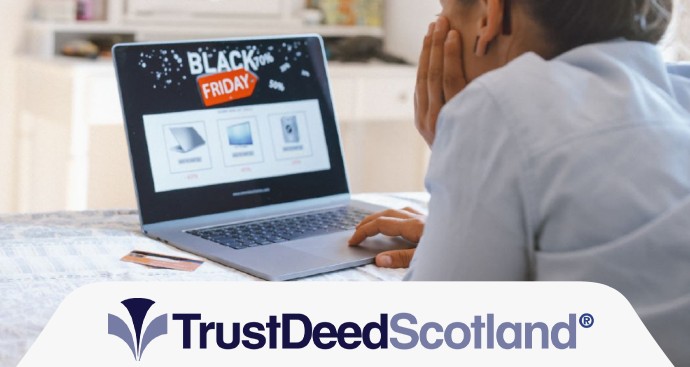
Resisting the pull of Black Friday and how it can affect mental health
Black Friday is designed to create urgency. Limited stock messages, countdown clocks and bold discount claims encourage quick decisions. When we feel we are running out of time, we are more likely to buy something without thinking it through. Studies also show that the pressure to buy can impact mental wellbeing. Constant advertising can create a fear of missing out (FOMO), which pushes some people to spend in order to feel better in the short term. Compulsive Buying Disorder also known as shopping addiction or oniomania, is a harmful behavioural condition and is estimated to affect around 300,000 people in Scotland. Psychotherapists writing in the Comprehensive Psychiatry journal have argued that addiction to online shopping should be formally recognised as an official mental-health disorder. Researchers say the condition presents consistent symptoms and characteristics, and that it can significantly affect emotions, thinking patterns, and daily life. Although “buying-shopping disorder” (BSD) has been recognised for decades, experts warn that it has taken on a new intensity in the internet age. Constant access to online stores, targeted advertising, flash sales and one-click purchasing can make urges stronger and harder to control. The Priory Group notes that when individuals overcome one addiction, such as alcoholism, other compulsive behaviours can sometimes emerge, including shopping. These behaviours often worsen in the run-up to the festivities, throughout Black Friday and Cyber Monday, and again during the January sales. Speaking about shopping addiction, they explained: “All rationale and reason around overspending are overlooked for the short-term gain, ignoring the longer-term consequences.” Some temporary coping and recovery strategies include:- Seeking support from people who understand the urges (other recovering shopping addicts, therapists, trusted friends)
- Removing shopping apps from your phone
- Unsubscribing from email and SMS marketing
- Discarding promotional leaflets that arrive through the letterbox
- Avoiding websites that you know will push Black Friday or sales content
- Planning other activities before, during and after Black Friday
- Avoiding social media entirely, or at least muting or unfollowing retail brands
Black Friday and Buy Now, Pay Later: A toxic combination
As retailers compete aggressively for your attention, the tactics used to drive spending often become more intense, especially during Black Friday. Time-limited offers, countdown timers, and personalised ads create a sense of urgency that can lead people to spend more than they intended. At the same time, the rapid expansion of Buy Now, Pay Later (BNPL) options across almost every major e-commerce website has added another layer of risk. BNPL is often promoted as a simple, interest-free way to spread payments, but the reality can be very different. The risks of BNPL during Black Friday BNPL can quickly become a problem because of: Deferred payments that seem manageable in November but pile up in December and January Late fees or additional charges if just one instalment is missed Debt stacking, where multiple BNPL plans run simultaneously across different providers Reduced visibility of your total borrowing — BNPL payments are easy to forget, and not all appear clearly on bank statements Encouragement to spend more, as BNPL increases average order values and lowers the psychological barrier to checkout During heavy sales periods, these risks increase dramatically because people make multiple purchases in a short space of time.BNPL regulation in 2025
As of 2025, the UK has continued moving towards greater regulation of BNPL products, with the Financial Conduct Authority (FCA) urging firms to treat customers fairly and provide clearer information. However, full regulation of all BNPL providers is not yet complete, meaning many shoppers still face:- Inconsistent affordability checks
- Limited transparency around late fees
- Varying levels of consumer protection depending on the provider
Black Friday: Why the Deals Often Aren’t Real Deals
Black Friday has a reputation for huge savings, but the evidence shows otherwise. Recent research from Which? (2024) analysed 175 products across major UK retailers including Amazon, Currys and Argos. Their findings were clear: 0% of the products were at their cheapest price on Black Friday 100% were cheaper or the same price at other points during the year. During the broader Black Friday period (15 Nov–12 Dec), 83% were cheaper or equal in price at another time, and 42% had been cheaper at least once in the previous six months Coverage in the UK press, including The Guardian, highlighted that not a single tracked item hit its lowest price on Black Friday, undermining the belief that it’s the best time to buy big-ticket items. In other words: the ‘limited-time deal’ you’re rushing to buy may not be a deal at all. Some retailers also take advantage of the Black Friday hype by promoting discounts that look substantial, but still don’t offer the best value. This becomes even more risky when buying expensive items, especially if it means dipping into an overdraft, using a credit card, or relying on Buy Now, Pay Later to “grab a bargain”. A simple tactic to avoid impulse purchases If you see something you think you must buy, add it to your basket — then step away and revisit it later. Ask yourself:- Do I still want this?
- Can I actually afford it today, without borrowing?
Why waiting can save you money
Most online retailers use cart abandonment strategies. About 41% of shoppers abandon their baskets and retailers know this. As a result, waiting can lead to:- additional discount codes
- free-delivery offers
- price-drop notifications
Christmas debt
Regardless of how you feel about Christmas, don’t let money and debt cause you stress. Christmas debt can be really damaging…- It adds stress in the back of your mind & stops you from enjoying time with your family.
- You start the new year on the wrong foot, New Year’s resolutions are trumped by Christmas debt.
- It cost you money. Buy now pay later, credit cards and store cards are expensive forms of borrowed debt.
Help with unaffordable debts
Trust Deed Scotland® have thousands of five-star Scottish debt help reviews on Trustpilot. With our experience of having helped over [volume] people in Scotland, we offer advice on Trust Deeds, the Debt Arrangement Scheme and alternative Scottish debt solutions.- Reduce monthly payments
- Unaffordable debts are written off upon successful completion of solutions
- Frozen interest and charges
- Reduced creditor contact
May not be suitable in all circumstances. Fees apply. Credit rating may be affected. Free debt advice available from moneyhelper.org.uk. For more info see trustdeedscotland.net/adterms